
Understanding Business Ownership Options in Saudi Arabia
Introduction
Saudi Arabia has quickly emerged as a very appealing place to invest. The Kingdom has implemented significant economic reforms to facilitate the presence of foreign entrepreneurs, startups, SMEs and multinational companies in the region, driven by Vision 2030.
Many industries are moving into Saudi Arabia’s lucrative business environment, driven by its strategic location, technological advances, manufacturing capabilities, and business-friendly reforms, making business setup in Saudi Arabia increasingly attractive for global investors.
But one question remains on many investors’ minds:
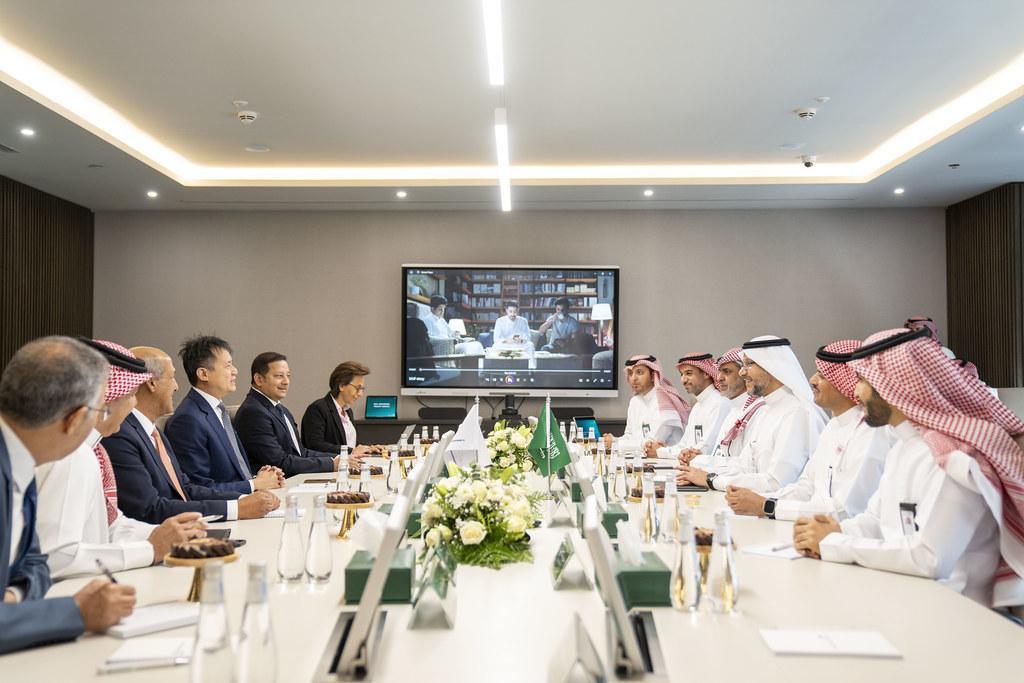
If you start your business with a Saudi local sponsor, or is it possible to be a foreign investor and own your business 100%?
Unfortunately, many entrepreneurs still hold onto outdated ideas that they believe each foreign firm needs to work with a Saudi national. This might be the case a number of years ago, but not now.
The selection of the proper ownership structure could impact your:
- Initial investment
- Legal compliance
- Business control
- Profit distribution
- Licensing requirements
- Future expansion opportunities
This is an extensive guide to both options, detailing the pros and cons of each and the industries that still require local sponsorship. It also outlines a practical approach to deciding which option is best.
This is the biggest myth surrounding Saudi business ownership.
This is one of the greatest misconceptions regarding Saudi business ownership.
The most commonly mistaken belief is:
All foreign investors require a Saudi sponsor.
This is not the case any more.
Saudi Arabia has taken a bold step to liberalize the country’s investment regime to welcome foreign investment firms. Today, thousands of foreign owned companies are conducting successful operations (100% foreign ownership), depending on their business activity and licensing requirements.
The confusion is because:
- The previous rules called for Saudi involvement in nearly all companies.
- Many online articles haven’t been updated.
- Industries have varying licensing requirements.
- There are still activities that need Saudi participation.
Instead of asking:
Is it necessary to get a sponsor from Saudi Arabia?
A more pertinent question is:
If my business activity is particularly suitable for 100% foreign ownership, can I obtain it?
There are several factors to consider:
- Industry
- Legal structure
- Investment amount
- Commercial activity
- Ministry approvals
- Regulatory authority
This knowledge can save months of delays and significant legal expenses.

Who is a Local Sponsor?
Local sponsors are Saudi citizens or Saudi-owned organizations involved in certain Saudi-investment related business transactions.
To date, almost all of the foreign businesses were required to be sponsored by Saudi Arabia. Sponsorship requirements are different today, depending on the business model.
There are a number of arrangements that might be referred to as a local sponsor:
1. Shareholding Partner
The Saudi partner has an equity stake in the business along with that of the foreign investor.
Ownership percentages are determined by laws of the activity.
Example:
- Foreign investor: 75%
- Saudi partner: 25%
Or any other legal structure.
2. Local Service Agent
In some professional companies, the services may be provided by a Saudi service agent without transferring the ownership.
The agent helps with the following:
- Government liaison
- Administrative matters
- Regulatory communications
The foreign owner will have operational control, subject to applicable regulations.
3. Commercial Partner
There are some regulated industries in which Saudi participation in the management or ownership is necessary.
It is more frequently used in sectors that have strategic or regulated activities.
Why businesses opt for a local sponsor.
Compliance may be the only benefit a Saudi sponsor can offer, but it can be significant.
These include:
Faster local networking
Partners who have relationships with established Saudi partners include:
- Government authorities
- Municipal offices
- Local suppliers
- Financial institutions
- Corporate clients
These relationships can help to fast-track products into market.
Elucidation of regulations.
Saudi business laws are constantly changing.
A local contact with knowledge of the region can help with:
- Licensing
- Compliance
- Renewals
- Employment regulations
- Municipality approvals
Market credibility
Customers are more inclined to do business with companies that are involved in Saudi.
This is useful particularly in:
- Construction
- Government contracting
- Industrial projects
- Real estate
- Public procurement
Cultural expertise
Local customs affect business etiquette, negotiations and commerce in Saudi Arabia.
Having a knowledgeable Saudi partner to help foreign investors avoid cultural misunderstandings.

The challenges that can arise for a local sponsor.
While there are benefits to sponsorship, there are considerations.
These may include:
- Shared decision-making
- Profit sharing
- Partner disputes
- Exit complications
- Ownership restructuring
- Differences between business goals or intentions.
The strength of the partnership can often be the key to long-term success.
So what is 100% Foreign Ownership?
The most important changes under Vision 2030 include opportunities for 100% foreign ownership.
Foreign investors who are qualified to do so can form companies without having to appoint a Saudi shareholder in many sectors provided that they are licensed and regulated.
This allows the foreign investor to hold 100 per cent of the company without violating the Saudi law on foreign investment.
Key Features
Completely foreign-owned businesses receive the following advantages:
- Complete equity ownership
- Independent management decisions
- Complete autonomy in company strategy.
- Comprehensive autonomy in company strategy.
- More flexibility in international expansion options.
- Simplified corporate governance
- Control over profit allocation (subject to tax and legal requirements)
Who Can Apply?
Eligibility depends on:
- Business activity
- Ministry approvals
- Investment regulations
- Corporate structure
- Required licenses
There are many industries that are open for foreign participation, and some are partially open.
100% foreign ownership has its advantages.
The 100% foreign ownership has its pros.
Full Control
The entrepreneurs have complete control over:
- Operations
- Hiring
- Branding
- Pricing
- Expansion
- Investments
The decision-making process is much quicker.
Complete Profit Ownership
Whilst subject to tax and other regulations, the investors continue to benefit from the financial returns of their company but not from the equity of that company.
Stronger Global Integration
International companies can harmonize business operations in Saudi Arabia with operations worldwide:
- Accounting systems
- Compliance policies
- Technology infrastructure
- Corporate governance
- Brand standards
Easier Investment Planning
Parent companies often choose to have a 100 percent subsidiary to:
- Internal reporting
- Financial audits
- Investor confidence
- Future acquisitions
- Mergers
What are the challenges of 100% Foreign Ownership?
What are the challenges for 100% Foreign Ownership?
Although it has a number of benefits, this model entails:
- More licensing documentation
- Higher compliance expectations
- Industry-specific investment requirements
- Concurrently, there will be additional responsibility for regulatory management.
- Reduced local business networks accessibility
Several firms have professionals that they rely on to guide them through the establishment process smoothly.
Local Sponsor vs. 100% Foreign Ownership
| Feature | Local Sponsor | 100% Foreign Ownership |
|---|---|---|
| Ownership | Shared or regulated structure | Entirely foreign-owned (where permitted) |
| Business Control | Shared depending on agreement | Full operational control |
| Profit Distribution | Shared according to ownership | Retained by foreign owner |
| Local Expertise | High | Must build independently |
| Government Relationships | Often stronger initially | Built over time |
| Licensing | May suit restricted activities | Available for eligible sectors |
| Expansion Flexibility | Depends on partnership | Greater strategic flexibility |
| Decision-Making | Joint in many cases | Independent |
| Corporate Governance | Shared responsibilities | Centralized management |
| Suitable For | Regulated sectors and strategic partnerships | International companies seeking full ownership |
What Industries are still looking for a Saudi Partner
Saudi Arabia has opened up a number of sectors for foreign investment, but other activities are restricted or require foreign investors to meet extra conditions and requirements based on national policy, national security or other strategic aspects.
Before applying for licenses, investors should always check current regulations for their commercial activity.
Saudi participation or extra regulatory approvals may continue in the following industries:
The extraction, production, and development of oil and gas.
Petroleum activities continue to be regulated by the government in a specific way in strategic upstream areas.
Military and Defense
There are strict rules regarding the ownership and licensing of defense manufacturing and security-related businesses.
Security Services
If it is an activity in relation to private security or sensitive infrastructure, other approvals may be needed.
Certain Media Activities
There are restrictions on ownership and/or increased regulatory scrutiny for publishing, broadcasting, and selected media operations.
Activities that are specifically related to real estate.
There may be special conditions under which some real estate investments are subject to additional conditions, especially those that are sensitive or designated.
Areas of Governmental Contracting – in particular categories.
Saudi participation in certain procurement projects might be encouraged and/or required based on the sector and the tender requirements.
Regulated Professional Activities
Some professional services may be subject to Saudi licensing, representation or industry-specific approvals.
Four reasons why regulations are still evolving.
Saudi Arabia is continually revamping its investment system to attract foreign direct investment and safeguard national strategic interests.
The Right Decision is being prepared.
The decision between Saudi local sponsor and 100% foreign ownership is not merely a legal one, it is a strategic one.
The right structure depends on your industry, investment objectives, growth strategies and operations.
In the following section of this guide, we’ll look at real business situations, discuss the pros and cons of each model, consider the time and cost of setup, and list some of the pitfalls you can expect to encounter with each model, and give you a step-by-step decision making process to help you pick the one that’s right for your business.



